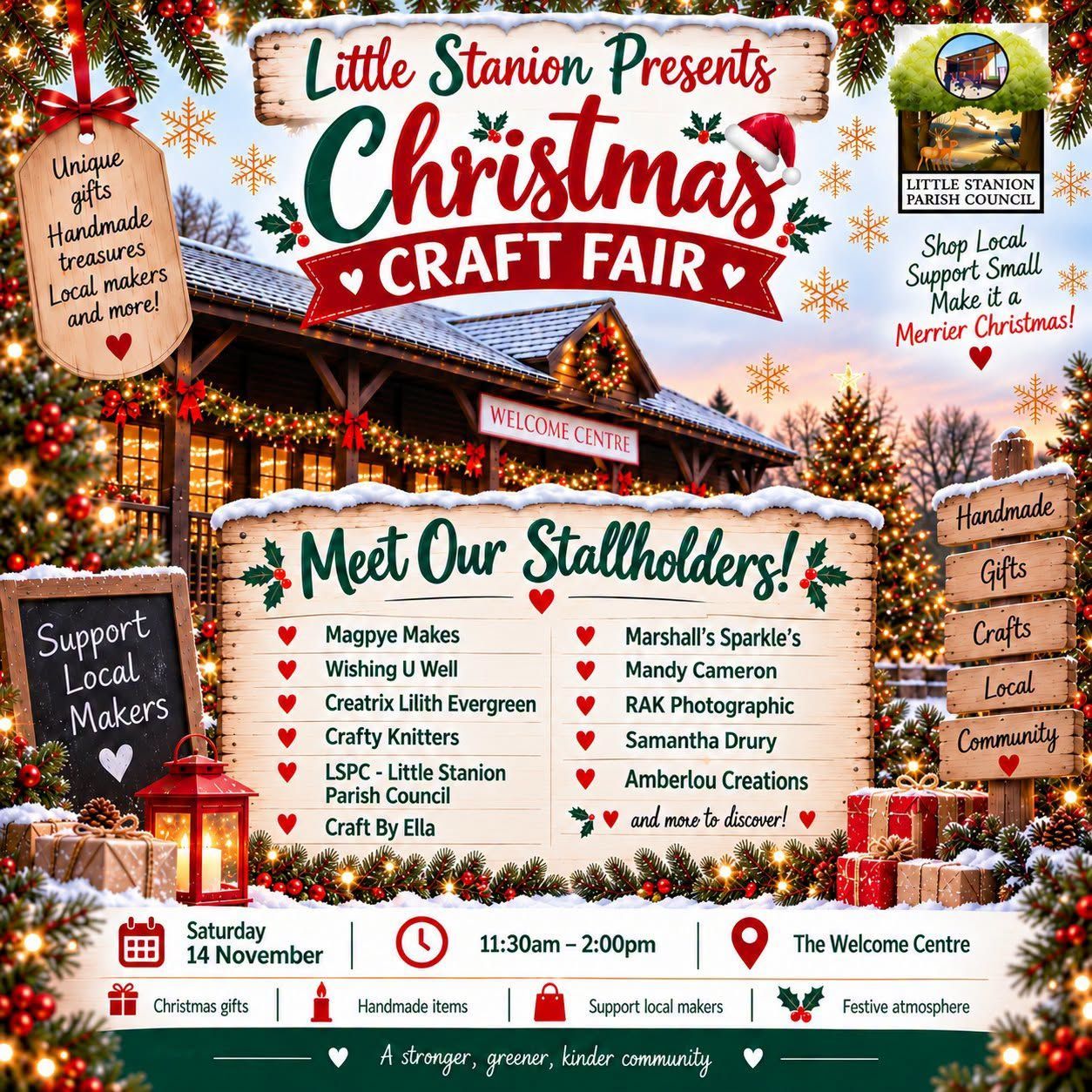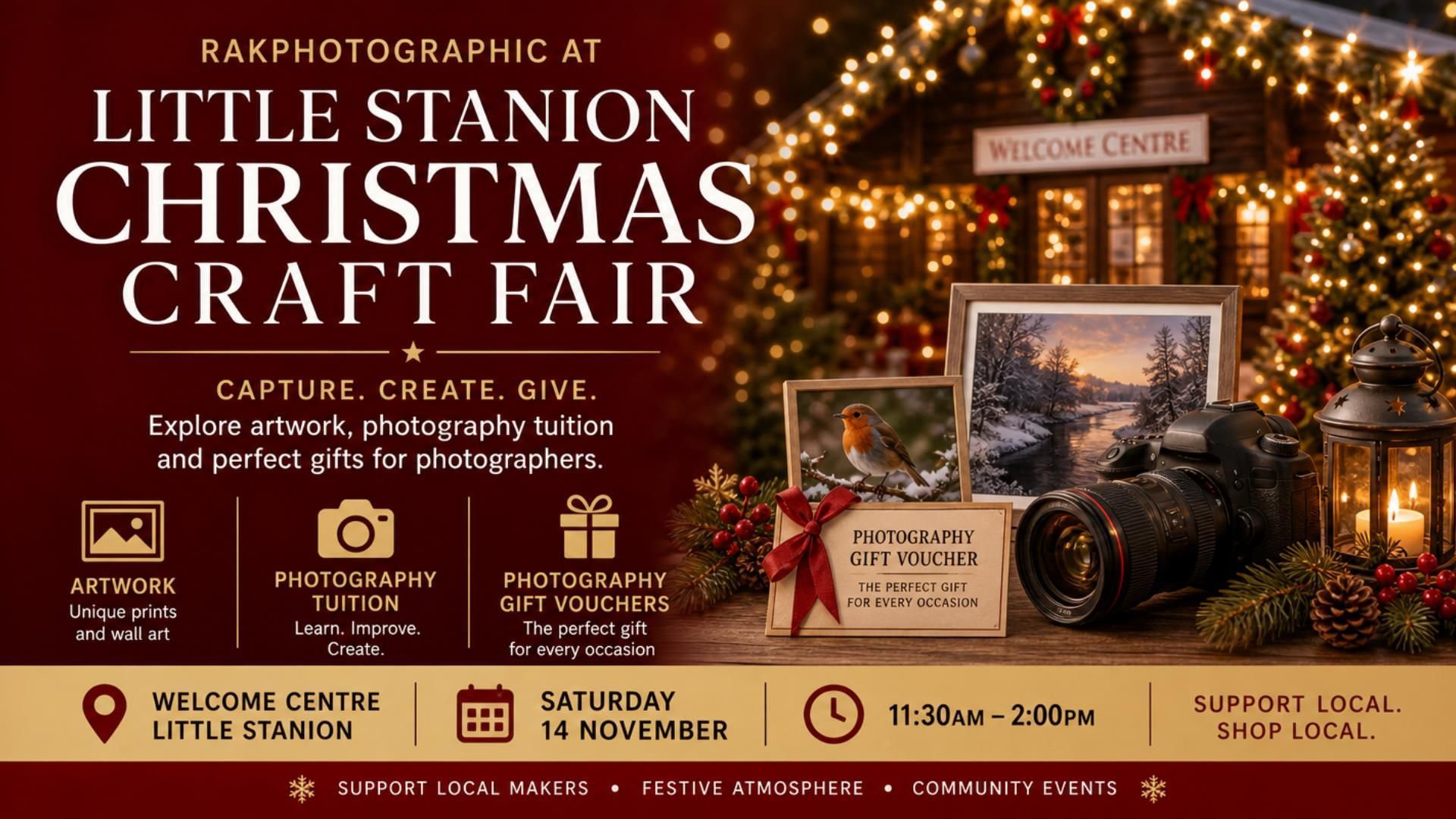
🎄🎅 COME ALONG TO THE FIRST LITTLE STANION CHRISTMAS FAIR! 🎅🎄
Get into the festive spirit and join us for our very first Little Stanion Christmas Fair!
🎁 Saturday 14th November 2026
🕚 11.00am – 2.30pm
📍 Welcome Centre, 1 Roman Road, Little Stanion, Corby, NN18 8FZ
Come along and enjoy a festive few hours with Christmas shopping, local stalls, gifts, treats and plenty of seasonal cheer!
Whether you’re looking for that special Christmas present, something lovely for yourself, or simply want to get into the Christmas spirit, we’d love to see you there!
✨ Bring your family and friends and help us make our first Christmas Fair a fantastic Little Stanion community event! ✨
🎄 SAVE THE DATE – SATURDAY 14TH NOVEMBER 2026! 🎄